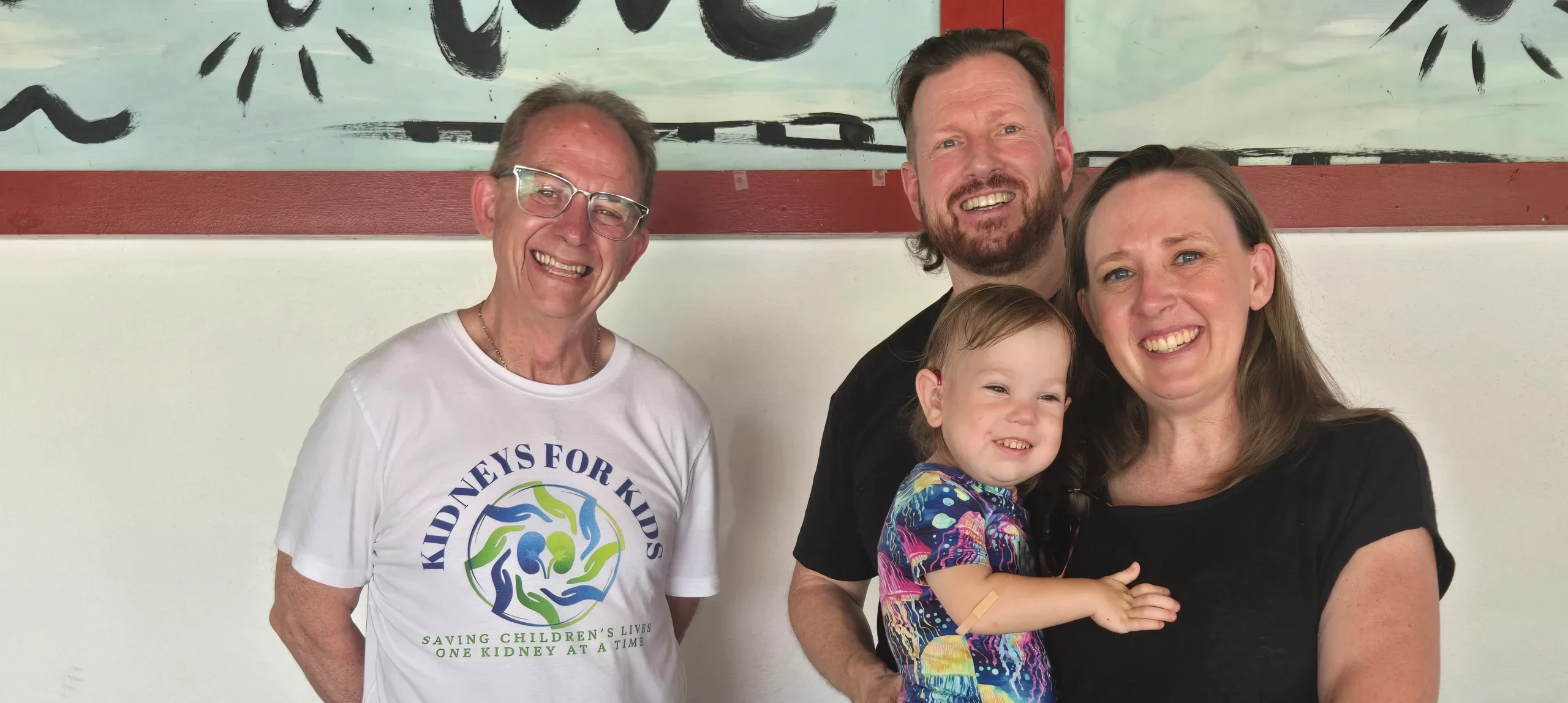
Kindness At Work:
So today I’m going to talk about the word goodwill. Goodwill, did you know, is a technical accounting term. It’s an asset that’s literally only created when a buyer shows up and pays a purchase price for a company that’s more than the fair value of that company’s net assets. So this unexplained differential is named goodwill. And with it, accountants actually can make balance sheets balance.
Now, of course, this isn’t how most of us think of goodwill. We experience the more human definition of goodwill. And I remember very clearly when that definition first entered my life. It was 1976, and I was five years old. And I was sitting there one morning in kindergarten class when in walked the father and older siblings of one of my friends.
And they handed me a present. They gave me a little toy red helicopter, that sort of looked like this (making a shape gesture). And in the moment, I didn’t really understand why they were giving it to me. I just remember sensing that they were happy and sad at the same time. And it wasn’t only until much later that I had my aha moment.
That my friend had lost his mom recently, and that this gift, it was a thank you, because I would often share my lunch with my friend on the many days that he would come to school without any lunch of his own. And over time, as things happen, I lost the toy, but I never forgot the lesson and especially how it made me feel. My friend’s father had rewarded kindness without cheapening it, and he made it tangible with an object, and he made it human in that exchange, and he made it shareable with this story. And in doing all of this, he created real value out of thin air by turning kindness into a scalable, collectively-owned asset called goodwill.
You know, and then for us, for many of us, my life, the years just pass at a dizzying pace and I collected a couple of fancy degrees, I became a dad myself three times over.
And I found myself wheeling and dealing as an investment banker and a private equity investor for many years. And the lessons from that red helicopter, they seemed incredibly childish and weirdly misguided in the world of business and finance. Because let’s face it: non-revenue-generating investments in people, they’re generally not measured, let alone rewarded. But something happened in the summer of 2013 that would forever change the way I thought about kindness, goodwill and their roles in reshaping business. I was on a series of just deflating board calls involving a failed investment in a company called Ashley Stewart.
Ashley Stewart as a clothing retail that has served and employed primarily plus-sized, moderate-income Black women in neighborhoods across America since 1991. And I felt accountable to my former employer, to my former investors, to the 1,000 plus employees at Ashley Stewart, and frankly, to myself because I had saved this company from a near-death bankruptcy filing just three years prior.
So this time I did something, I took an action, I made a choice, I resigned as chairman of the board and I agreed to serve as a first-time CEO of this broken company. But I agreed to do it just for six months. I just wanted to avert a nasty liquidation.
And then I wanted to come home and get on with my life. I had immediate pangs of regret during those first few weeks at Ashley Stewart. The corporate headquarters was a converted warehouse. I just remember there being a lot of bugs. There was no Wi-Fi at the headquarters, and the stores didn’t have computers.
And because there was a lack of trust, there were vendors in the lobby demanding to be paid in cash upfront. And because of them, a lot of my employees were scared. And so I ended up having to hire an armed security guard to protect them.
And I felt alone, like, on every dimension you can think of — geography, industry, gender and, yeah, race. My first town hall, it went something along these lines.
“Hi, I’m James. I’ve never done this before. You know, I may be the least qualified person to run this company. But I’m here and I’m willing to learn. Oh, and by the way, after this speech, I’ve got to head out to the DC,” — that’s a distribution center, right — “I’ve got to head out to the DC, I’ve got to find stuff to sell to fund payroll.
But don’t panic. Because I think that if we can center kindness and math together, then maybe we can get out of this together.” And I don’t know why I said some of these things with my outside voice.
(Laughter) I may have panicked just a little bit, but the words were true and they did come from my heart. And you know, what happened was that the people who really wanted to solve these problems once and for all, they stepped up.
And it was the women. It was the employees and customers alike at those stores, in those neighborhoods across America who came forth. And they offered me insight after insight as we work side by side together. And some of the customers, sensing that we were in a lot of trouble, they even offered to bring back their clothes hangers so that we could save money. You know, I know what you may be thinking, you might think, geez, there were a lot of reasons why the ladies of Ashley Stewart might have rejected me.
But they didn’t. They did the exact opposite. And store after store sort of worked this way: They would say, “You’re James? You’re the new CEO of Ashley Stewart? Well, OK, let’s go.
” And this played out in town after town, city after city. And their generosity toward one another and their kindness to me, it just rekindled memories of the red helicopter.
And I remembered the lesson that goodwill, like, real goodwill, it is a real asset that can compound and be amplified independent of financial capital. So late, late nights — And I’m going to use these words very deliberately — It inspired me to compose, draw, design, create a new business plan with new mathematical formulas, operational protocols that were woven together with multi-sensory storytelling, whose singular purpose was to create real value, driving real goodwill. The business plan fundamentally had three concentric spirals underpinning it.
So picture this. So first, we had the courage to establish a culture of kindness in the workplace. Period, end of story. It was a strategic priority day in, day out. And yeah, there were moments as individuals we failed.
But as a collective, we were very successful in changing attitudes about the transformative power of kindness at work. Because you see, what kindness does, it distributes the joy, actually, of problem-solving to everyone.
It creates a safe environment that unleashes innovation, especially the unselfish kind. And it turns perceived liabilities into assets, which, as any financial accountant will tell you, mathematically has to result in the creation of real equity value in every meaning of the word. Second, once we felt sure about the authenticity of the internal goodwill that we had co-created, we just wanted to show the whole world and make it tangible to everybody.
So by trusting our employees and our customers and by leveraging their smartphones and their social media platforms, we were able to scale our marketing creative efforts very fast in a very low-cost and organic way.

We invited everyone in, and we were able to merge ecosystems and blurring the lines between outsider and insider, and them and us. And we were able to create a seat at the table for everyone, which, by the way, enabled us to leverage the assets and the balance sheets of everyone. And third, once we centered goodwill, we had to center people. And it wasn’t long before we realized we had to redo our financial formulas and our financial reporting.
So payroll, instead of being an expense, became an investment. And internal communications, well, that was just a great way to train and to teach. And the materials that we created became critical first stanzas of the overall narrative that was our brand song.
And working capital? Well, our vendors became effectively co-investors, and we would measure working capital as a unit of trust that we were rebuilding together step by step.
And finally, human resources. Well, how could that possibly be a cost center? See, when you center on maximizing goodwill, it forces you to actually measure it. And you realize that despite what the rules of accounting might say, that it’s operations and leadership and culture that actually create goodwill. Not some outside source of financial capital.
And it makes accounting actually accountable.
And it isn’t long also before you realize that the entire flow of your operations has to naturally follow suit. So to illustrate all of this, I’m going to take you back to the holiday season of 2013, which was only four months removed from my sort of “meh” town hall. We were out of money at this point, and I was terrified. But we made a couple of decisions that seemed to have long-term importance for our efforts.
We hosted a really modest holiday party at a homeless shelter for women in Brooklyn, New York. And at this point, we didn’t have anything to give, so we gave our time. We gave our hearts, and we found a few boxes of merchandise samples that we donated. And around that time as well, we organized a chain-wide sales competition. The top 40 stores earned the right to donate 250 dollars to a local charity of their own choosing.
Together, these two things, right, the event — the party, the competition, they were just a way for us to say “thank you” and “goodbye” to the local neighborhoods and communities that had supported this company for 20 years.
And the outpouring was just amazing. We saw real friendships that have been developed over those 20 years play out right in front of us. And our newly installed e-com platform? We operated it in a way that accentuated that and connected people, rather than diminishing humanity.
And sales just exploded. And just like that, we had found a way to operationalize goodwill. In our internal culture, in our outbound sales and marketing, but also, perhaps most significantly, in our sense of compensation system. There were all three spirals just sort of doing this, mutually reinforcing each other. We measured everything.
You know, down the road, as the strategy really took hold, and I was finally able to secure some financial capital and make some necessary technological investments, we just did the same thing, just over and over again at scale.
So we rolled out something called a CEO Citizenship Award. That was the most prestigious, highest-compensated bonus system in the company. It went to those employees who lived out the following credo. You act like an owner.
Be a good friend. Be a good mentor. We never factored in sales or revenues into these determinations. Second, you know, our marketing team, our outbound-facing consumer team continued to do most of the most important internal communications. And I, as a former high school teacher, I relished the fact that I could teach the principles of money, life and joy to my colleagues at scale.
And that really kind of sad holiday party? Well that evolved into something big. We called it Finding Ashley Stewart, which was an annual, nationwide, year-long search for unsung women leaders in our communities. It would culminate in front of 3,000 screaming fans at the Brooklyn Kings Theater and a star-studded concert.
And the best part of all of it was that the vendors, which by now included some of the world’s leading tech and financial companies, they’re the ones who funded all of this.
You know, I ended up spending seven years at Ashley Stewart, leading it. So, far from getting on with my life, it became part of my life, especially the friendships. And we had to make some tough business decisions along the way, and not everyone made it.
But our overall strategy and philosophy generated staggering results. And yes, it showed up in our financial statements, too.
So within two years, we generated more in annual operating profit than we paid for all of the assets of the company. And our digital strategy, which never forgot to center the real friendships in the stores, it landed us on the stages of the most prestigious business conferences in the world celebrating our growth and our innovation, only a few years removed from not even having Wi-Fi. And it wasn’t long before the financial community, well, they changed their minds and they showed up at our headquarters, but this time with their checkbooks, and they stroked us a check that made us convert our real goodwill into accounting goodwill to the tune of well north of 100 million dollars. And I know that none of this would have been possible without the lessons that I learned from my friend’s father way back in kindergarten.
He invested dollars, but also his time and his heart into a little toy red helicopter in 1976.
And in the way that he did it, it created a real asset called goodwill. And that goodwill compounded quietly for decades and then ultimately helped save a company, around a thousand jobs, a safe place for a really deserving group of women, and over 1 billion dollars in overall economic productivity. And in doing so, he taught an enduring lesson that helped this grown man regain his balance, a true balance, by remembering to slow down and to see the world through the eyes of a five-year-old child who knows unequivocally that there is one and only one definition of goodwill that creates real value in life and yeah, in business, too.
Thank you very much for listening! #kindness #goodwill #friendship
What Is Heat Transfer?
Heat-transfer printing goes by many names including thermal printing, thermal-transfer printing and thermal-wax transfer. This process transfers an image to an object, such as a t-shirt, using heat. The image is first printed onto special paper or vinyl. In some cases, the image is produced by layering wax dye on a shirt or other item.
You can easily create your custom t-shirt at home using this method. All you need is a regular printer and heat transfer paper. An iron provides the heat you need. For small projects, this is a cost-effective method.
Heat transfer printing can also be used for large-scale projects, such as a business promotion. However, the heat transfer method is less economical for large projects.
Most people think of this as a technique to use for fabric items. But it can be used on wood, ceramics, plastic and more
What Is Screen Printing?
Screen printing uses a combination of ink transferred directly to the object and a stencil through which the ink passes to produce the design you want. The printing industry also refers to this as serigraph printing, silk screen printing and serigraphy. This printing method works on bags, t-shirts, glassware, backpacks, binders, flags, ceramics, signs and many other objects, including snowboards and skateboards. It costs less, too, unless you need small quantities.
This process requires a few steps, beginning with printing the design to transparent acetate film. The design is then cut out. The acetate film is placed on a mesh screen coated with a layer of light-reactive emulsion. To get the image you desire, you need to place your stencil down in reverse.
When exposed to light, the emulsion hardens, but the areas covered by the stencil will remain liquid. The liquid is then rinsed away, leaving you with a screen stencil. When printing a multi-colored design, a screen stencil must be created for each color.
This screen is laid over the fabric, and ink is poured onto the screen. The ink is spread evenly across the stencil using a squeegee. When creating multicolored designs, you must use extreme care to lay the screens in perfect alignment. This process works exceptionally well for commercial-size projects but is not cost-effective for small projects.
Pros and Cons
Heat transfer items can achieve highly detailed designs, so they look fantastic when first created. Unfortunately, they don’t age as well as screen-printed ones. You can achieve fine details with silk screen printing, but it is a meticulous process. On the plus side, as long as high-quality ink is used, screen-printed items can look great for a long time.
Direct-to-garment printing (DTG)
A newer method that utilizes a digital print head to print designs directly onto different surfaces, DTG printing is in a rapid growth phase.
DTG printers are functionally similar to the typical inkjet printer you’d find in a home or office. The process is fundamentally the same: an image is digitized by the printer and then printed directly onto the t-shirt or garment. Ink is sprayed onto the surface by carefully controlled print heads
DTG printing inks also require curing (like screen printing inks) to permanently adhere. Most DTG printing shops use a curing dryer or heat press to cure their products.
DTG printers range from small desktop sized models to units that require large climate-controlled garages.
Many envision a future where customers order online and a DTG printer automatically prints the shirt. While many businesses have attempted this, the technical and labor challenges have proven tremendous (even for Amazon). DTG printing is not as simple as pushing a button – there are many variables and factors to consider.
Why use DTG instead of screen printing?
Screen printing presses can print shirts quickly – sometimes up to 1,080 pieces an hour!
However, a screen printer’s setup time limits what’s possible. Screen printers can print one design at high volume quickly. But if they need to print multiple designs, or do just a few prints, screen printing can be prohibitively expensive compared to DTG printing.
Here’s why: the extensive labor required to create, separate, coat, expose, and register screens makes the screen printing process inefficient for small quantity orders with lots of colors.
Let’s say you want 20 t-shirts. A 4-color design usually requires 5 different screens to print (since you need an underbase screen).
It takes much more time to create those 5 screens and set them up on the screen printing press than it does to actually print the 20 shirts!
For small (12 pieces or less) orders with lots of colors, DTG printing is a great fit.
Karma Inc Apparel uses DTG printing exclusively for all Karma Inc Apparel products, providing our customers with the highest quality products in the industry!
#karmaincapparel #DTG #tshirts #hoodies #mens #womens #kids #children #americanmade #cotton #organiccotton #karma #kindness #clothing #trend #equality4all #brand
Conclusion: Why Buying American is a Good Choice
Buying an American made t-shirt is a great way to support the American economy and also to get a quality product. These shirts are often made of organic, sustainable, and even recycled materials.
There is a lot of false advertising out there when it comes to buying clothing. You might think you are buying an American made t-shirt but it is actually imported from another country.
A lot of people these days are looking for more sustainable and environmentally friendly products, so they prefer buying clothes that are organic or made of hemp instead of cotton. This can be difficult because most clothes labeled as organic or sustainable are not American Made either.
—
The United States is the largest producer of cotton in the world.
In America, cotton is grown on more than 16 million acres of land.
The average American consumes over 30 pounds of cotton per year.
—
The idea of America as a manufacturing powerhouse is long gone. A lot of the jobs that were once filled by Americans are now being done overseas in countries with cheaper labor and less regulations. But there are still plenty of great American-made clothing brands that produce high-quality, sustainable, and organic clothes at reasonable prices.
So, why buy American made clothing? Here are three reasons:
1) You’re supporting an American business that employs Americans. 2) You’re contributing to the health of our environment by buying clothes made from sustainable materials like hemp or organic cotton. 3) The quality and craftsmanship is better than what you can find in other countries for the same price.
—
Buying American made clothing means supporting the American economy and creating jobs in the United States. It also means that you are buying a product that is more sustainable and ethical.
There are many brands that make their products in America, like American Apparel, Nike and Levi’s. There are also some brands that make their products in America but not exclusively, like Hanes and Adidas.
—
The idea of buying American made clothing is not a new one. The concept of buying clothes that are made in the USA has been around for decades. But with the rise in globalization, many people have forgotten about the importance of buying from American manufacturers.
The benefits to buying American-made clothing are numerous. First, it helps create jobs for Americans and boosts the economy by keeping money within the borders. Second, it’s better for our environment because it reduces pollution and waste created by shipping goods overseas. Third, it supports local businesses and communities which creates a sense of unity and independence among citizens who buy their clothes here at home. Finally, you get better quality products when you buy them from America because they are manufactured to meet higher standards than those made outside of our borders. We are proud here at Karma Inc Apparel to feature 100% American Made Cotton, and Hemp Unisex T-Shirts! Shop for Good with us! Peace, Brian Martindale
The Power & Importance of a Leader’s Ability to Feel or Display Sensitivity or Concern for Others
From -Brian Martindale; Owner-Karma Inc Apparel
Compassion is a feeling that we have for others and is the opposite of apathy.
Compassion is a feeling that we have for others and is the opposite of apathy. When people are compassionate, they feel bad when they see someone in pain or struggling and want to help them. They also feel good when they help someone else or do something nice for them. Compassionate people are usually kind, empathetic, caring, and forgiving. They are also loyal to those who help them out in tough times.
Compassion has been shown to lead to happiness through its ability to create positive relationships with those around us as well as increase our overall life satisfaction by helping us be more mindful of our own needs as well as those around us.
Compassion is a feeling of deep sympathy and concern for someone who is suffering. It is often the result of empathy – feeling what the other person feels, or imagining what they might be going through.
The word comes from the Latin word “compati” meaning “to suffer with.” Compassion has been called “the queen of virtues.” The Dalai Lama says that compassion is “the key to peace.”
Compassionate leadership can be seen in leaders who are willing to listen to their followers, who are open-minded and understanding, and who show care for those around them.
Compassion is a powerful and positive human emotion that has been known to have many benefits. It is the feeling of sorrow, love, or concern for another person’s suffering. Compassionate people are more likely to help others, as they are able to feel empathy and care for other people’s needs.
Compassionate leadership is a management style that focuses on the needs of employees. This style of leadership encourages employees to work together, communicate effectively, and commit themselves fully to their work.
Peace and Love
Hello everyone,
Kindness is a virtue that we should not take for granted. We need to be kind to one another and treat each other with respect.
The world has been a mess for a while now and it was only when we started showing each other kindness that things started to change. Kindness is what brings people together and kindness is what will make the world a better place in 2022.
—
Kindness has been a topic of discussion for many years. The world has seen a lot of kindness in the past few decades, but there is still more work to be done. In 2022, the world will see an increase in kindness.
There will be more unity and equality across the globe, and people will come together to make peace happen. Compassion and love will fill the air as people come together to help each other out.
—
Kindness is a universal virtue that all of us should be able to practice. In 2022, we hope that kindness will be the norm and not the exception.
—
The world is a better place when we are kind to one another.
We can all agree that kindness is important in our society. It’s what brings us together and makes the world a better place. In 2022, kindness will be more important than ever before because it will help us to unite and make peace with each other, no matter what we believe in or who we are.
Peace and Love to All!
Good Day!
Unity is not just a word. It is a way of living, an idea that we can all live together in peace and love.
We can all be together in peace and love by being kind to one another and treating everyone with respect.
—
The world is in a state of change. We are witnessing the rise of new technologies, new politics, and new ways of living. We are also seeing a global shift in consciousness that is leading to an increased sense of unity and compassion.
We have seen an increase in kindness and empathy for others, as well as a greater sense of equality between people. This has to lead to a more inclusive society, with less violence and prejudice against minorities.
In 2022, we should be living in a world where we all have access to the same opportunities regardless of our gender, race or religion; where we can all make decisions that reflect our level of consciousness; and where we are all able to live together with peace and compassion.
—
The world is changing. The world is becoming more and more open and accepting of diversity. People are beginning to understand that we are all the same, no matter what our race, gender, sexuality or religion. Through compassion and unity, the world can be a better place for all of us. Let us make this a priority in 2022!
Peace and Love to All!
Our T-Shirts, Our Brand and Our Message
A message from the owner:
Hello to our customers, friends, and followers. I’ve been thinking as we enter 2024 about the journey my life has been on since starting Karma Inc Apparel with my son Dave in 2009.
Karma Inc Apparel has given me over 14 years to reflect back to the day my son and I had the first glimmer of what type of T-Shirt brand we would create. Unsure where to go and how to start, we moved forward only knowing we wanted our clothing to represent Peace, Love, Giving, and Caring for others. We were going to be Karma Inc Apparel ‘The Brand That Gives Back.’ as we knew doing good things creates good in return.
Creating a clothing brand so focused on kindness sometimes meant not creating shirt designs that were as cool or catchy as the clothes that my son used to wear. The ones with salty sayings and graphics, that put people down and could be considered offensive. From the start it was my choice to try to be different in a positive way, hoping that at some point people would catch on to what we were doing, and Karma Inc Apparel was born!
We began our journey in 2009 with 6 basic designs and a self-built website. We set out to share our vision with the world. Early on when my son was still involved with Karma Inc Apparel I realized that I had many connections with people in the music industry; and being a bass player myself I began to ask my friends and performers to wear our clothing onstage.
Then something happened that would forever change Karma Inc Apparel.
The First Time I Realized This Could Work
 Patty Smyth and her band Scandal were in town for the summer festival. They played an amazing show on a perfect evening. The temperature was in the mid 70’s and the air was comfortable. As the crowd was cheering for an encore, to my delight, out walks Patty Smyth wearing a Karma Inc Apparel T-Shirt that we had made for her. Watching Scandal rock that stage and Patty rip that encore in our T-Shirt was a surreal moment and one that will stay with me forever.
While I sit and reflect on my 11 years, this was the moment that would forever change my outlook on the business. We had taken a picture of Patty up there on the stage and posted them to our social media sites and sales started coming in. We had done it! With the help of one like-minded performer and suddenly this thing that was real, Karma Inc Apparel was now a business!
Not long after that, I was asked to be on an internet TV show by my friend new Brian Pastoria, not knowing that he and his brother – Grammy Winner Mark Pastoria – were Detroit rock legends with the bands D.C. Drive and Adrenaline. After appearing on several of their shows at Harmony Park studios with the late Bob Bauer, I was asked by Joann Purtan to do an interview on WXYZ TV in Detroit. We had our first real opportunity to talk about Karma Inc Apparel, and how our idea evolved into a business all about giving back.
I knew we had something special going, and I decided whatever we sold going forward, we would donate 10% of any profits made to help someone in some way. Little by little, we came up with new designs and found more people who felt like us. People who knew that it wasn’t just clothing, it was an idea that would one day with a little help, become a movement.
By 2010, my son had gone on to a wonderful career, and I carried on in various forms with Karma Inc Apparel and its message. I began adding more products to complement the shirts we had been selling. It wasn’t long until we had hoodies, tank tops, kids t-sh,irts and long sleeve T-shirts ready to go. Things were moving nicely, but I felt I could still do more.
“It’s a sad realization when you become aware that most of us fall into a routine of getting so wrapped up in the little things that we don’t see the bigger picture. “
A Couple Years into Karma Inc Apparel – Brent’s Story
One evening in late 2010; had the chance to meet Hugo Ferreira and the band Tantric, receiving alot of support that evening from then drummer Kevin Figueiredo, who wore the first version of our Bleeding Heart “Love” design. And I was introduced to someone who would soon change my life forever, and become a good friend of mine.
When I met Brent through the band that night; he needed a Kidney . Hugo had asked me if we could come up with a T-shirt design for the band that we could sell to raise money to help Brent get to his appointments. The amount of time and resources spent traveling back and forth to appointments and dialysis to be able to be on the list for a Kidney Transplant is astounding.
“Sadly, we were not able to raise nearly enough money with that design, not everything catches or has the cool factor that makes it desirable.”
It’s a sad realization when you become aware that most of us fall into a routine of getting so wrapped up in the little things that we don’t see the bigger picture, or what someone else is going thru. Someone didn’t go through a yellow light and made you late for work, and your day is ruined. I know there is no way to get my day back on track if I forgot to pick up my specific coffee creamer. It’s the little things. You know, that distract us from our path or mission.
During that time, I saw up close what someone who needs a Kidney transplant goes through daily. Vacation? What’s a vacation? You must make it to Dialysis 3 times a week. I also saw that in between dialysis, Brent fought complications from infections, problems with dialysis ports, and near total renal shutdown. My coffee creamer didn’t seem as important anymore. Seeing this happening right in front of me made me realize that all the small things I complained about amounted to nothing. How many people battle this disease, and they wait and fight and wait and fight until it’s their turn for their Kidney transplant- if it is ever their turn.
So, I pressed on with a plan to continue to help Brent,and to make Karma Inc Apparel a nationally known Clothing Brand. I had a vision of a local storefront to showcase my Brand, as well as work from local artists. I wanted to make sure we had a stage for local music acts to have a venue to play new music,and so my store would be something one of a kind. Giving back, and finding a way to help Brent get his transplant so he could live the life he deserved to.
“As soon as I had the opportunity, I had myself tested to see if I was a match for Brent, but it was not meant to be. Then Brent took another blow due to unforeseen medical issues and was held out of any programs at that time. I had wanted so badly to be able to help.”
We secured the perfect location in Bay City, MI and once we opened the store, I started partnering with a different charity quarterly. Realizing how many organizations that are out there trying so hard to help people, we quickly vowed to help a different organization every month . We focused on issues that were important and relevant to the message Karma Inc Apparel was destined to spread and nothing has changed. Below I appear for the 1st time on TV!
“Currently, there are more than 98,000 people waiting for a kidney transplant in the United States alone.”
A Friend Opened My Eyes and Destiny Took Over From There
We were trying hard to get Brent into a transplant program that he was qualified for. We really wanted to get him into the Paired Donation program, also called chain donation. In this type of program, a kidney donor can donate to someone that they matched but not have met in their lives. In exchange, the person you are attempting to help receives a kidney from someone who matches them. Odds of receiving a kidney are greatly increased in a program like this. Currently, there are more than 98,000 people waiting for a transplant in the United States alone.
The suffering that I realized kidney transplant patients go through. Something that could be corrected simply by finding someone who matched that was willing and able, and yet, the goal seemed too far away
“Right in front of my eyes, there was a girl who wasn’t even a teenager going through the same hell that Brent was going through.”
Days before opening our store in Bay City, I was there making sure everything was perfect. I had a taste for a piece of gum as I have never wanted gum before. Our storefront was located close to just about everything, so I decided to walk to a convenience store for a pack of gum. As I was in line waiting to check out, I saw the face of a young girl in the newspaper. I had to take a double look, but it was my turn to check out, so I grabbed the paper too and walked back to the store.
With the newspaper securely in hand, I arrived back to Karma Inc Apparel and began reading the article and right in front of my eyes, there was a girl who wasn’t even a teenager going through the same hell that Brent was going through. I continued to read the story and was particularly moved by how the young ladies mother had stood on a street corner with a pink sign, desperate to find a donor for her daughter. She was a mother who was willing to do anything for her child.
I don’t know why I needed gum so badly that day, or why her face caught my attention… but I was meant to read that story. An overwhelming feeling of being in the right place at the right time came over me and even though I couldn’t help Brent, maybe I could have an impact and save the life of someone who I didn’t even know. I picked up the phone and began making calls.
 The first factor that needs to be considered when matching a donor to a recipient is blood type. I just knew I was going to be a match and after I found out that I was a candidate, I contacted the University of Michigan Transplant Center where she had already been admitted into their program. Within 2 weeks, I was being tested again for Jessica like I had been tested to see if I was a match for Brent. Then we waited.
The Holidays Rolled Around
“I couldn’t tell if I was being given a chance to make up for past mistakes or a chance to say thank you for everything I had been given and received in my life.”
The day before Thanksgiving in 2012, we were around the house preparing for the holiday when word came in. I was a perfect match. It’s not possible to put into words what your mind does at that moment. Excitement because it’s real, but a monstrous decision to make that nobody can make for you. I had to decide if I was going to give one of my organs, that help keep me alive to someone I had never met.
I couldn’t tell if I was being given a chance to make up for past mistakes, or a chance to say thank you for everything I had been given and received in my life. I had been given great health, I had great friends and supporters, and I owned a clothing brand. I preach Kindness, Equality,and Inclusion with our clothing designs, and I was ready to let everyone know that it wasn’t just a T-Shirt company, it was me along with a movement spreading Kindness.
I believed so strongly in what our clothing represented that after speaking with family and friends, I decided it was the right choice. I believed that I could and would live the same life only having 1 kidney instead of 2. The Doctors who I had been seeing let me know that being as healthy as I was, I could easily share part of my healthy life with someone else.
Christmas had just passed and after committing to going ahead, Jessica and I were introduced and rode together to our surgeries on January 11, 2013. We had a wonderful Christmas and now I was going to give this person a Happy New Year and a start on a new life. The surgeries both went wonderfully! One moment you are laying there, and the gas hits and it’s lights out and just like that you wake up and are never the same. Jessica’s life was never going to be the same either.
I was so eager to get back to work on Karma Inc Apparel that I pushed myself too soon and had to take a few weeks off and be on lite duty as anyone who donates a kidney is supposed to do anyway. Within 6 weeks after surgery, both Jessica and I were now 2 perfectly healthy individuals.It was amazing meeting her again because I I could see the results of what a living organ donation does for someone and the brightness she had. When it comes to a living kidney donation vs. kidney from a cadaver, a living kidney donation usually will have a lifespan 3 times longer.
Ever since that life-changing moment, so many good things have come to me. I was reconnected with a good friend from many years past, and she became my wonderful wife.I became a grandfather to 2 of the most amazing grandchildren you could ever ask for. I had been blessed with a great career outside of Karma Inc Apparel that has allowed me to bring my ideas and designs to more people and make impactful donations to the charities we now support.We started donating 20 percent of percent of all profits instead of 10.
We began working with well known people in music like well known rock drummer Kevin Figueiredo, bassist Joe Bass, and The Womack Sisters, well known Detroit artist Dan D’addario, and social media and design guru from Folk N Funky Jared Govitz. My little vision, now going on 11 years old still lives to bring Kindness,Equality,Unity,and Love to everyone.
Karma T-Shirts and Karma Clothing have become our staple. We are known as the “Brand That Gives Back”. I am so proud to have held on to a vision, when nobody believed in us in the beginning and when no one else knew anything about Karma Inc Apparel and marched forward.
Back to Our Mission:
We sell clothing from manufacturers like American Apparel, Stella Stanley, and other top names; while keeping competitive prices, and still make sure that we donate 20% of proceeds to charities that help people.
Our goal has never been to get rich, have fancy things and make YouTube videos about how we got where we are so we could sell ads. We only simply care about helping others and promoting kindness and support to those who choose to live their lives helping others as well.
By doing good things, good things keep coming back to all of us now involved in this worthy venture. We personally stand behind every sale and appreciate your help in our efforts to better our world, one shirt, one hat, one coffee mug at a time. Every purchase makes a difference in someone’s life.
Thank you, friends and fans.
May peace and love follow you everywhere.
Create your own Good Karma by helping others.
Brian Martindale,
Owner, Karma Inc Apparel

Karma Inc Apparel Reviews: Bella + Canvas 3001 Unisex T-Shirt
The Bella + Canvas 3001 Unisex T-Shirt is hands down our favorite T-Shirt to work with. Time and time again, we return to this style and here’s why…
It’s humbling to think about the journey that Karma Inc Apparel has undertaken. Back in 2009, we were wide-eyed, bushy-tailed and ready to take over the world. In 2018, we are wide-eyed, bushy-tailed and ready to take over the internet. We have seen partners come and go. We have been fortunate enough to meet and work with some incredible people, and we have been able to have the experience of working with a lot of different fabrics and materials and we would like to share some of our opinions on the best of the best, and why day in and day out we continue to use the 3001 unisex sized T-Shirt from Bella + Canvas.
The Bella + Canvas “Be Different” slogan is catchy and it’s nice to see a company who truly strives to live up to the expectations they set with the public.
Bella + Canvas
Bella + Canvas is based out of Los Angeles and has spent the last 20 years working on innovative ways to make sure that they can provide retail quality T-Shirts to the wholesale market. Where most companies would see insurmountable challenges when trying to keep every step of their process in the United States, Bella + Canvas simply changed the definition of insurmountable.
The entire sewing floor in Los Angeles, CA is completely solar powered. They have devised methods to reduce costs and their carbon footprint by creating a dye process that uses little more water than flushing toilet for every pound of material while other garment manufacturers use up to 15 gallons of water.
The Bella + Canvas “Be Different” slogan is catchy and it’s nice to see a company who truly strives to live up to the expectations they set with the public. All these combined things allow the company to employ more than 800 people and proudly say “Made in America”.
Bella + Canvas Brand Video
Shop Bella + Canvas T-Shirts and more.
The 3001 Unisex T-Shirt
T-Shirts, in general, have been in most of our lives long before we can remember. We have grown so accustomed to them that it easy to fall into “A T-Shirt is a T-Shirt” mindset. I was one of those people until I first put on my favorite T-Shirt, a brilliant bright red Karma Inc Apparel T-Shirt. I remember seeing it for the first time and just being blown away at how tightly knitted and smooth the cotton was. I enjoy wearing a plain white T-Shirt as an undershirt, and I slipped the T-Shirt on over my undershirt and the fit was so perfect. I am 6’1 and around 190 lbs. and the size large made me feel good wearing it. I love that feeling when you feel good in your clothes.
Bella Canvas describes their T-Shirt:
This updated unisex essential fits like a well-loved favorite, featuring a crew neck, short sleeves and designed with superior Airlume combed and ring-spun cotton that acts as the best blank canvas for printing. Offered in a variety of solid and heather colors
3001 Unisex T-Shirt Sizing
Sizing is exceptional with the 3001 Unisex Tee. In our past experience with unisex shirts from other manufacturers – Men looked funny with a fit that was too small and the same size for a female created what can best be described as a ‘frumpy’ appearance. It was hard to avoid so a large number of print companies avoided these shirts.
There was nothing worse than having an amazing design, an excited customer and an opportunity to blow them away only to give them a final product that didn’t fit how it was supposed to. Now with the prevalence of E-Commerce, with the expectation of speed and quick service, it is becoming increasingly harder to offer the all-important WOW! Factor that creates lifelong customers.
The 3001 from Bella is cut and sewn by humans and is one of the only shirts in our experience that offers honest Unisex sizing. I am 6’1 and weigh 190 pounds and I am wearing a size large Bella + Canvas 3001 T-Shirt as I type. The sleeves are a great length and the shirt comes down and covers half of my rear end – but the sizing is not the most impressive feature.
Airlume Ring-Spun cotton is the top dog. It is the highest quality ring-spun cotton can be. Bella + Canvas comb their cotton longer than other clothing manufactuerers, removing up to 2.5 times more impurities from their final material.
3001 Unisex T-Shirt Material – Where the Goods Live
Bella + Canvas boasts that the 3001 is created using 100% airlume, ring-spun cotton. Fancy words, but do you have any clue what it means? Let’s shed some light on that.
First, what is ring-spun cotton? Well, I am glad you asked! Ring Spun is a process which takes cotton and spins it in such a way to create long, soft strands of cotton. This process repeated creates longer, softer, and more durable cotton fibers. Far exceeding the strength and softness of rawer materials found in lower quality clothing. There is a lot more that goes into this process, but now we have a basic understanding.
Airlume Ring-Spun Cotton is the top dog. It is the highest quality ring-spun cotton can be. Bella + Canvas talks on their website briefly about their process. They comb the cotton longer than most removing up to 2.5 times more impurities from the cotton creating a flat, uniform appearance to the shirt that provides a superior printing surface.
The super soft material is tightly weaved creating a jersey like fabric. Jersey knit cotton is weaved in a way that allows the cotton to stretch, and maintain its shape while remaining stronger than a standard T-Shirt to wear and tear.
Airlume cotton is noticeable from the moment you see your new shirt. It looks like quality, it feels like quality and it downright SMELLS like quality and the Bella + Canvas 3001 delivers.
Our Experiences:
Ever since switching over to the Bella + Canvas 3001 unisex T-Shirt, Karma Inc Apparel has had 0! Yes, that’s right, 0 returns due to the quality of the T-Shirt. The 3001 looks great on me, it looks great on everyone that works with us and our customers agree.
Bella + Canvas 3001 Unisex T-Shirt has earned 5 stars from Karma Inc Apparel in all categories and we will never stop using this T-Shirt.
Summary:
The Bella + Canvas 3001 Unisex Shirt in our opinion is the best unisex sized T-Shirt to hit the market. Not only has Bella found a way to create a T-shirt that actually fits how it should – they’ve done it with style and the environment in mind.
– 100% Ring-Spun Airlume Cotton – 2.5 times purer than the average quality T-Shirt.
– Jersey knit creating increased durability, stretchiness and strength. This shirt will hold it shape much longer than most shirts.
-Top notch printing quality – This is completely credited to the airlume cotton.
-Bella + Canvas offers incredible customer support and boasts they are sweatshop free. Made in the USA!
Read the following from Bella + Canvas
Where does the manufacturing take place
WHERE IS BELLA +CANVASS MADE?
One of the most common questions we get is where our garments are made. And because we’re all about transparency at BELLA+CANVAS, we wanted to shed some light on our supply chain so you know exactly where our tees come from!
USA Manufacturing
American made is something we believe in deeply, which is precisely why we’ve dedicated immeasurable resources to growing our domestic sewing during the two-plus decades we’ve been manufacturing tees. We employ over 800 people in our Los Angeles facility, including our domestic sewing operation that yields an astounding 10 million units per year. What’s more? We also have a Made in the USA Collection that is dyed, cut, and sewn in the US, and our private label program is totally USA made as well.
Hybrid Manufacturing
We’ve developed a hybrid approach to our manufacturing that utilizes America’s strengths along with the strengths of our international partners to create the highest quality product, at the best price, all while supporting US jobs.
Sourcing:
We source fiber yarns and knit yarns from sources locally and from the best suppliers around the globe. Because our sourcing is not restricted by any trade agreements, we have the ability to access the highest quality raw materials in the world, and in turn, make best fabrics in the industry.
Dyeing:
We dye our fabric locally (in Southern California) using the most efficient dyeing equipment available. For every pound of fabric dyed, we only use 3 gallons of water, which is 2-5 times less than other apparel manufacturers. To ensure the highest level of consistency of color, our color matching is all computer driven. Every fabric lot is color matched using automated equipment and checked on a lot by lot basis for consistency.
Cutting:
Almost all of our cutting takes place right here, at our Los Angeles manufacturing headquarters. We have the most advanced cutting facility in North America and have developed proprietary software and cutting tables that allow us to cut an absurd number of garments a week with unmatched precision. We utilize automated technology that makes it possible for all cutting to be done by machine, and after the blade precisely cuts the fabric, it makes small notches indicating exactly where the pieces should be lined up when sewn, ensuring perfect construction. Having the dyeing and cutting processes in our backyard (literally!) allows us to produce T-shirts with the utmost attention to quality assurance.
Assembly:
Cut fabrics are then assembled locally or in other sewing facilities in the north and central American regions. Our quality control team is in every factory ensuring the cut ensures sewers are finishing garments with the exacting quality that the BELLA+CANVAS brand is known for. Also, the neck label on each BELLA+CANVAS piece will list the country that the garment is sewn as the country of origin. That said, a BELLA+CANVAS tee with a tag that says “Nicaragua” still has USA-made elements to it.
Off-the-Shelf and Ready to Ship:
Once the garments are sewn, they come back to our US headquarters where they go through a final round of quality control. They are then sent out to our distributors or stored in our massive distribution center in LA, so when a customer places an order, it is ready to ship that day. We have over 60 million garments in stock so you can always order with confidence!
The result is a first-tier global operation led by technology and data – all available in Los Angeles. If you are in the LA area, we’d love for you to stop by for a tour! Interested?
Karma Inc Apparel Donation
BAY CITY, MI— Five years ago, Jessica Schwerin’s mother wasn’t sure if her 10-year-old daughter was going to make it to age 11.
But today, she continues to thank the man who allowed her daughter to survive.
Thanks to that man — Brian Martindale — Schwerin, 15, is a healthy and happy student at Bay City Central High School currently working to obtain adrivers license. Martindale donated his kidney to Schwerin five years ago today, Jan. 11.
“He saved my daughter’s life and my life,” said the teen’s mother, Stacey Schwerin.
Jessica Schwerin has check-ups at the University of Michigan hospital in Ann Arbor every three months to make sure all is well with her donated kidney.
“More people should donate because obviously, it changes someone’s life but it also changes the family from my perspective because it saves them from the grief,” the teen said. “You don’t have to see them go through dialysis or end up just dying.”
Martindale, 56, made sure that Jessica didn’t have to endure either of those scenarios.
The Bay City businessman is a strong believer in karma. Since he donated his kidney in 2013, good karma has come back to him.
He even has an online apparel company named it, Karma Inc. Apparel. Martindale said he donates 25 percent of profits to five charities, one of them being the C.S.Mott Children’s hospital where Jessica received her kidney.
ADVERTISING
inReadinvented by Teads
“This was one of the greatest experiences of my life,” Martindale said. “Of course there’s a little pain involved when you do something like this, but nothing good in life comes without a little pain.”
There are more than 98,000 people in the U.S. waiting for a kidney donation and 14 people die every day from kidney failure,according to the National Kidney Foundation.
Martindale said he uses his experience as a donor to help others. He’s a peer mentor to kidney donors at the U of M Transplant Center and shares his experience as a kidney donor.
Schwerin said she’s always wanted to go into the medical field but her experience as a kidney recipient has influenced her decision even more.
In 2013, Martindale learned about Schwerin’s need for a kidney transplant in a Bay City Times-MLive article detailing the family’s hunt for a kidney donor. Schwerin was diagnosed with genetic kidney failure. Her mother went as far as grabbing the attention of potential donors by holding a sign on the corner of Wilder and State Street roads.
Owner of Bay City’s Karma Inc. Apparel to donate kidney to 10-year-old Jessica Schwerin
“If you do good things for other people, good things will come back to you,” Martindale said. ” I’ve been blessed a thousand times since I donated this kidney.”
Martindale, Jessica and her family will celebrate the anniversary over dinner this weekend.
View Comments (3)
#donatelife #Givelife #Livingorgandonor
My story of Good Karma- by Brian Martindale; Karma Inc Apparel
My story behind our Karma Inc Apparel shirts began in 2008 in Las Vegas,Nv. I had moved to Las Vegas from Bay City,Mi. in 2005 with plans of staying for a few months of tradeshow work as a carpenter. I ended up staying until May of 2008,owning a small business,and having my son David stay with me in 2008 while he attended UNLV,and worked in Las Vegas.
While David was with me in April of 2008, we discussed creating a line of designs for t-shirts and other apparel together as David had always worn shirts that had cool designs and catchy slogans. I wanted it geared toward giving back and helping others,and the word Karma kept coming up. After I wrote out 3 pages of my thoughts,3 days later David handed me a drawing of what became the now Karma Inc Apparel logo. Shortly after that we returned to Bay City, and I kept working on ideas for designs with meaning to each one; as in Peace,Love,and Giving Back to others.
In August of 2010 I was working full time,and getting our Karma Inc Apparel designs on some well know people,as we donate 25% Of All Profit to charity.I was introduced by Hugo Ferriera,the lead singer of the band Tantric, to my now friend Brent Lafromboise,who needed a Kidney. At the time Hugo asked me if we could design a special shirt for raising money to help Brent get his Kidney Transplant. I said yes, and after getting to know Brent, I decided a few months later to see if I was healthy enough to be part of a Paired kidney Donation,as I did not match Brent. This would have allowed Brent to get a Kidney from someone who did match him,if I donated to someone who matched me. So I got tested at the University of Michigan,and found I was healthy enough to donate. But a few months later, Brent was put out of their program due to health issues.
I stayed on the donors list,and moved forward with a store for my Karma Inc Apparel in Bay City,which opened in October of 2012. While reading the newspaper which I just happened to pick up on September 29th,2012,just days before opening the store,I saw a picture of a mother and her 10 year old daughter. The mother-Stacy Schwerin,had been standing on the Wilder Road and State street corner in front of WalMart in Bay City,Michigan; holding a pink sign. Her daughter Jessica was in stage 4 Kidney failure,and needed a Kidney immediately. Many people had stopped and offered money, and 2 said they would be willing to get tested, and the story got the attention of the newspaper,and local TV. Two days after reading it, I decided to call the mothers phone,without letting on who I was. I found out I was the same blood type,and then contacted the University of Michigan,and got re-tested. I turned out to be Jessicas’ perfect match. Stacy and Jessica where notified the day before Thanksgiving in 2012 they had a match,but they didn’t know who. We were introduced in December,and on January 11th of this year,Jessica received my left Kidney at C.S. Mott Childrens Hospital. We have now become good friends,and it turns out we only lived 4 blocks apart. Because of creating a line of apparel geared toward helping others,I was led to becoming a Kidney donor. If not for good Karma,I would have never known about what someone goes through with Kidney disease,and would have never been involved in a Kidney Donation.
Since then, Jessica has done well with my Kidney, we Celebrated 7 years since our surgeries on January 11,2020. And I am now a Peer Donor Mentor at The University of Michigan Transplant Center. And , I am married,and have a wonderful Grandson Maxson ,and a Granddaughter Maisie-the First Girl in our Family in 103 Years! Always #Choosekindness ,Stand Up for your Beliefs,and Remember-“YOU RECEIVE WHAT YOU GIVE”
Brian Martindale-Karma Inc Apparel


 Patty Smyth and her band Scandal were in town for the summer festival. They played an amazing show on a perfect evening. The temperature was in the mid 70’s and the air was comfortable. As the crowd was cheering for an encore, to my delight, out walks Patty Smyth wearing a Karma Inc Apparel T-Shirt that we had made for her. Watching Scandal rock that stage and Patty rip that encore in our T-Shirt was a surreal moment and one that will stay with me forever.